Embedding GEDSI in Project GANESHA: From Local Priorities to Investable Energy Solutions
Project GANESHA is designed for delivery at scale. By embedding GEDSI into engagement, training, and measurement, we build stronger adoption pathways and clearer evidence of impact. This post outlines how this’s being applied in Nepal and what we’ve learned so far.
Table of contents
- Purpose of this blog
- The SDGs we align with and why they matter to delivery
- Listening first: needs assessment at the pilot sites
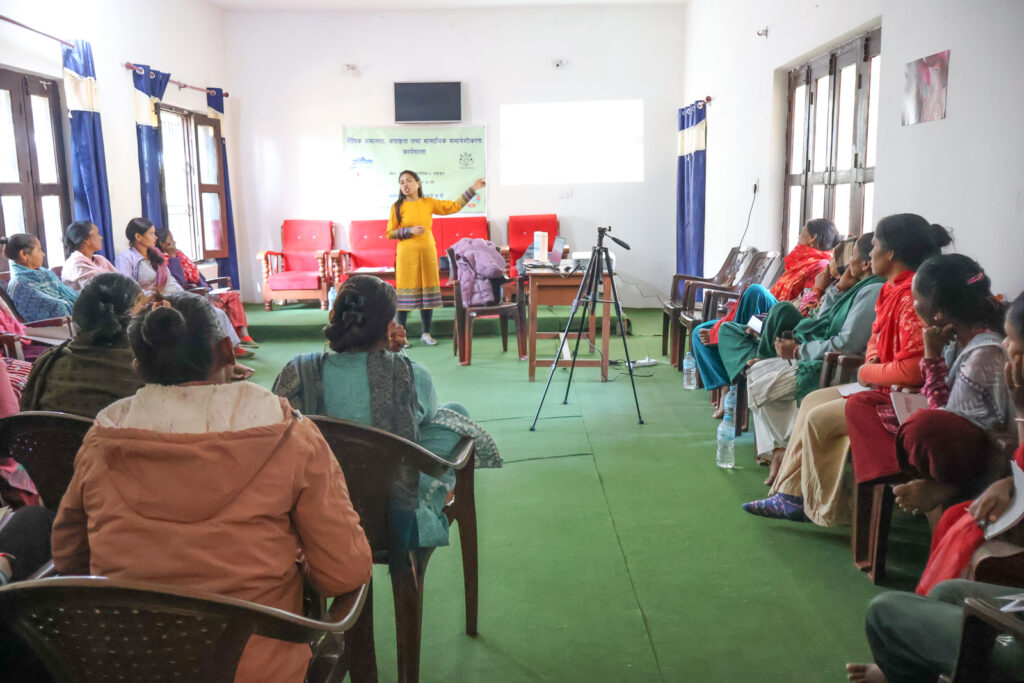
- What we delivered: GEDSI workshop at Pilot Site 2 (Bardiya)
- What we measured: pre- and post-evaluation results
- How this strengthens project delivery, scale, and investability
- What happens next
1) Purpose of this blog
Project GANESHA is designing low-carbon, modular battery packs and supporting systems that operate in real-world conditions, for real communities.
As the technical design progresses, Global Solutions is embedding Gender Equality, Disability, and Social Inclusion (GEDSI) into day-to-day delivery, ensuring that decisions reflect local priorities and support equitable access as the work scales.
Over the past two years, we have been developing our GEDSI strategy to be tailored to each location, based on what we learn on the ground and what local communities identify as priorities. That strategy is now a repeatable delivery element: it can be applied to future energy and mobility projects, adapted to new locations, and measured using consistent indicators.
This blog summarises that approach as applied at Pilot Site 2 in Bardiya, shares the measurable outcomes from the most recent GEDSI training, and explains why this matters for long-term project performance, scalability, and investability.
2) The SDGs we align with and why they matter to delivery
Our GEDSI approach directly supports the UN Sustainable Development Goals 5 (Gender Equality) and 10 (Reduced Inequalities), which guide how we design energy access to achieve equitable impact.
SDG 5: Gender Equality
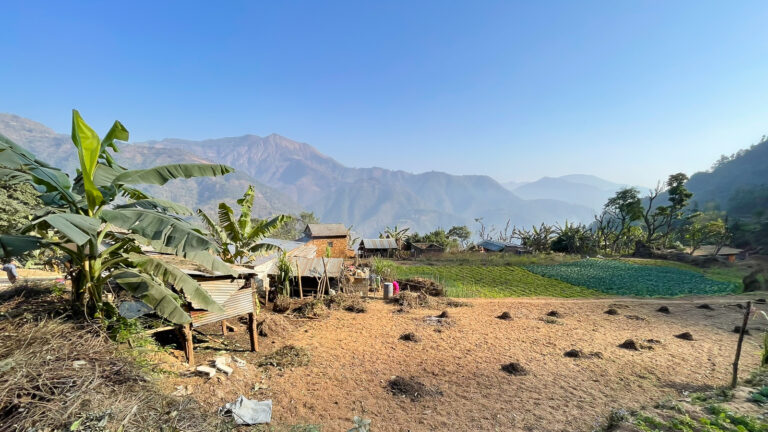
In Bardiya and Dhading, this means prioritising women’s access to cleaner energy for cooking, mobility, and income opportunities, recognising that time spent gathering firewood and unreliable transport limit their participation in education, work, and community decisions.
SDG 10: Reduced Inequalities
This covers households facing multiple barriers – women and girls, lower-income families, people with disabilities, ethnic minorities – ensuring they can access the same energy services, information, and project benefits as others in their communities.
Why these matter to GANESHA delivery
Gender gaps and social exclusion directly affect energy project outcomes: who adopts services, who pays reliably, and who maintains systems over the long term. By addressing these upfront through needs assessment and training, we design solutions that more people can actually use, strengthening both social impact and commercial viability.
3) Listening first: needs assessment at the pilot sites
On-the-ground reality first
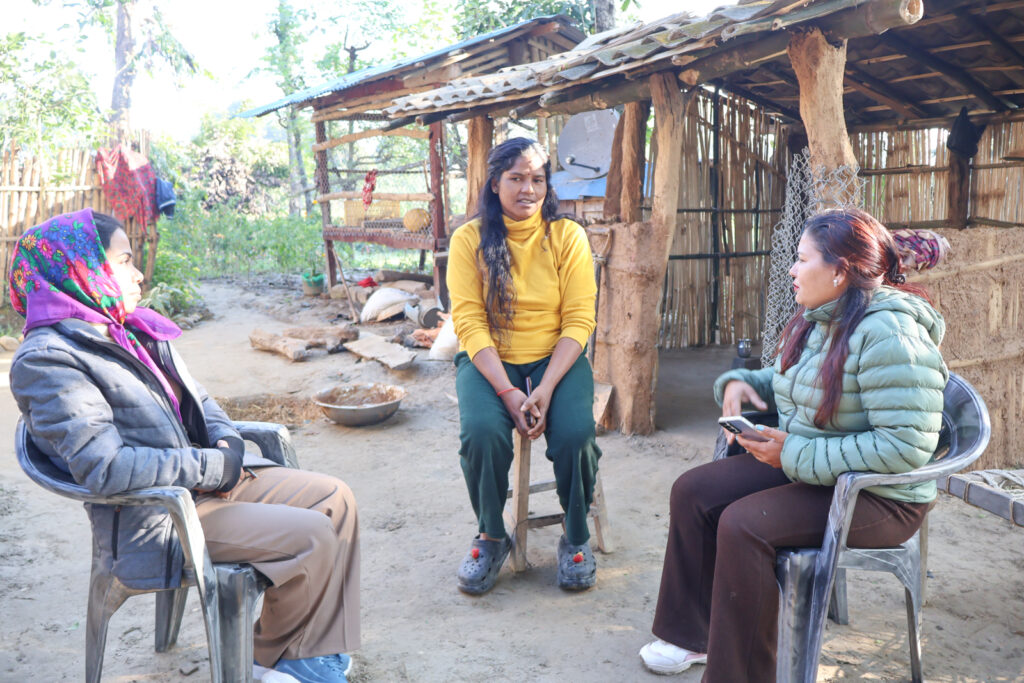
People consistently tell us they don’t want vague promises; they want energy solutions that fit their daily lives. That’s why Project GANESHA starts with structured listening through local needs assessment, conducted before finalising any plans or interventions. This listening-first approach directly reduces delivery risk by avoiding misaligned investments and designing services people are willing and able to use.
Local partnership driving results
A key element is our collaboration with local NGO 3STG to ensure all interventions are context-sensitive and community-led. Their on-the-ground knowledge helps surface what matters most to local people.
Practical priorities identified
The assessments pinpointed daily-life needs directly linked to energy access and local opportunity, including:
- Transport and energy solutions that help local products to reach markets, children reach school reliably, and ecotourism grow
- Clean cooking alternatives that reduce the health impacts of firewood smoke and the time burden of gathering firewood (often 2-4 hours daily for women)
Why GEDSI matters to energy outcomes
GEDSI is central to energy access because it influences who participates, who benefits, and whether services are adopted and sustained over the long term. When projects are shaped by local priorities and inclusion is designed in from the start, delivery is better positioned to support higher utilisation, stronger participation over time and clear community ownership, which are all critical as systems move towards scale.
Barriers we systematically address
The assessments also highlighted barriers that can limit access and participation, which we now design around:
- Low awareness and familiarity with GEDSI concepts
- Uneven participation in community decision-making
- Gaps in access to information, training, and opportunities
From insight to action
Survey 2 showed low familiarity with Gender Equality and Social Inclusion concepts in both Dhading and Bardiya. We addressed this directly through targeted training at each pilot site. Future surveys and activities will continue to track engagement and benefits for people with disabilities, lower-income households, and other groups who often face barriers – building a clear evidence trail from needs → interventions → measurable outcomes.
4) What we delivered: GEDSI workshop at Pilot Site 2 (Bardiya)
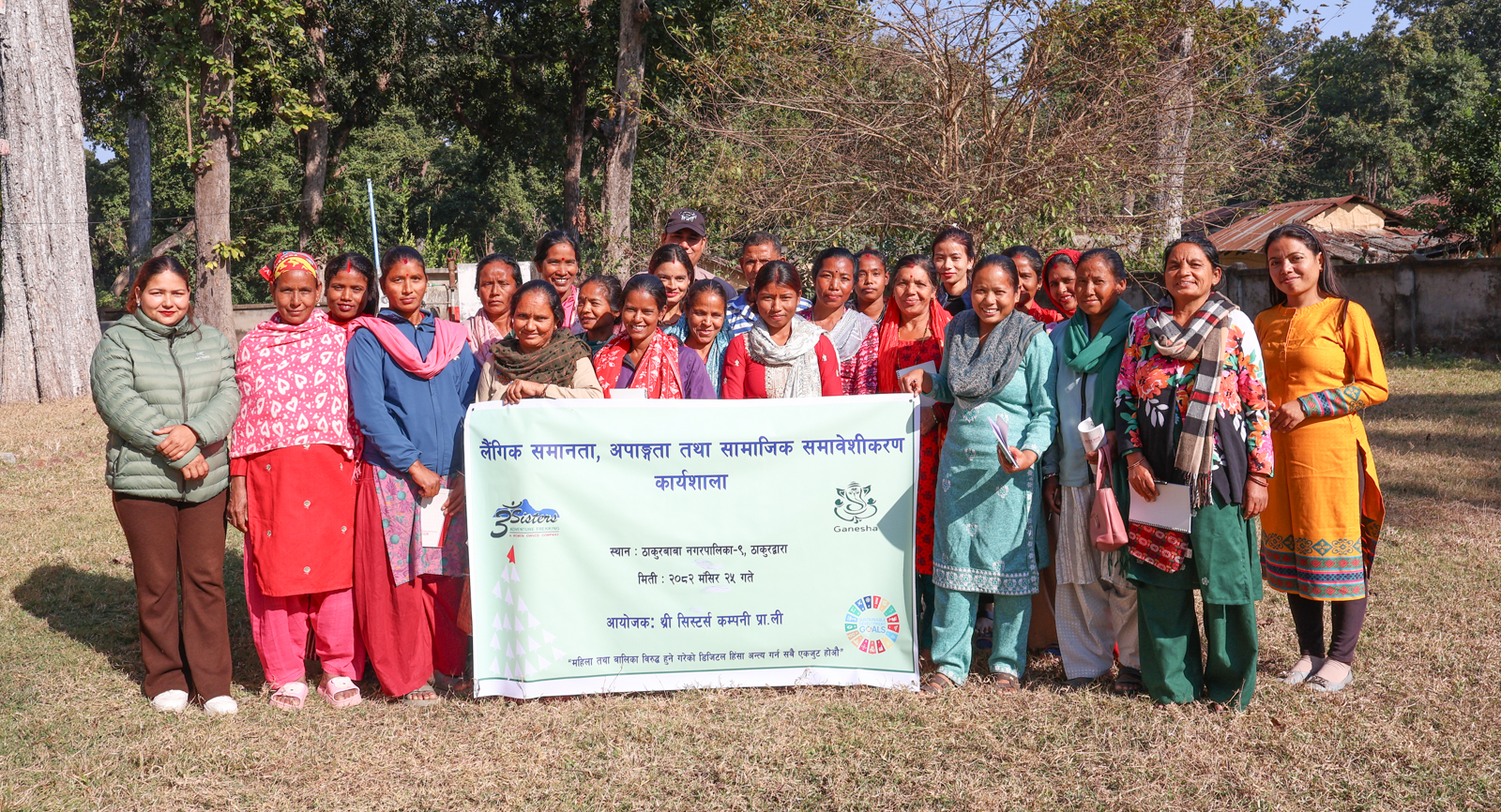
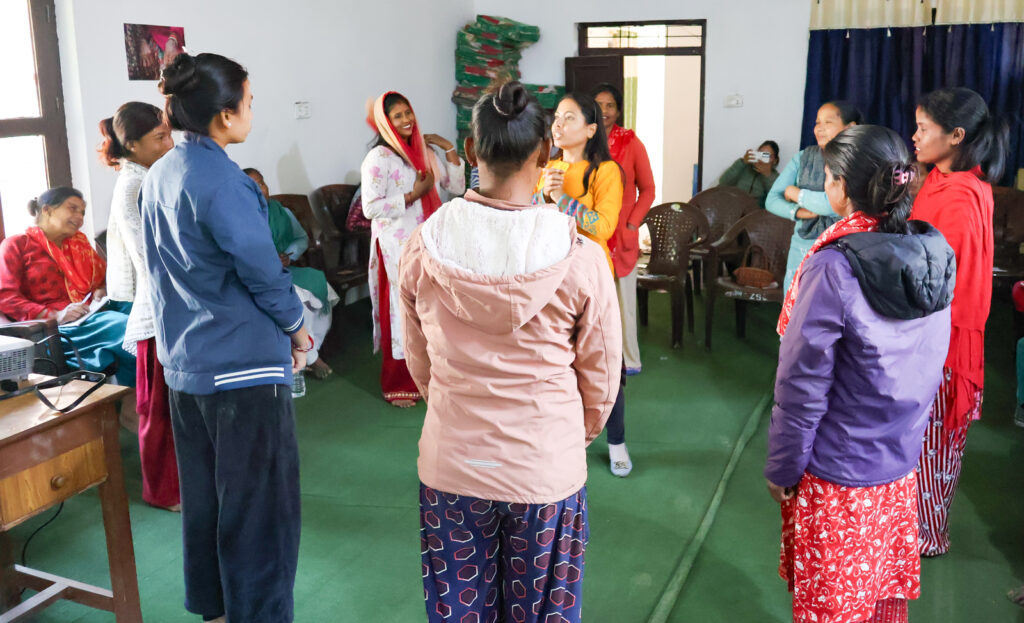
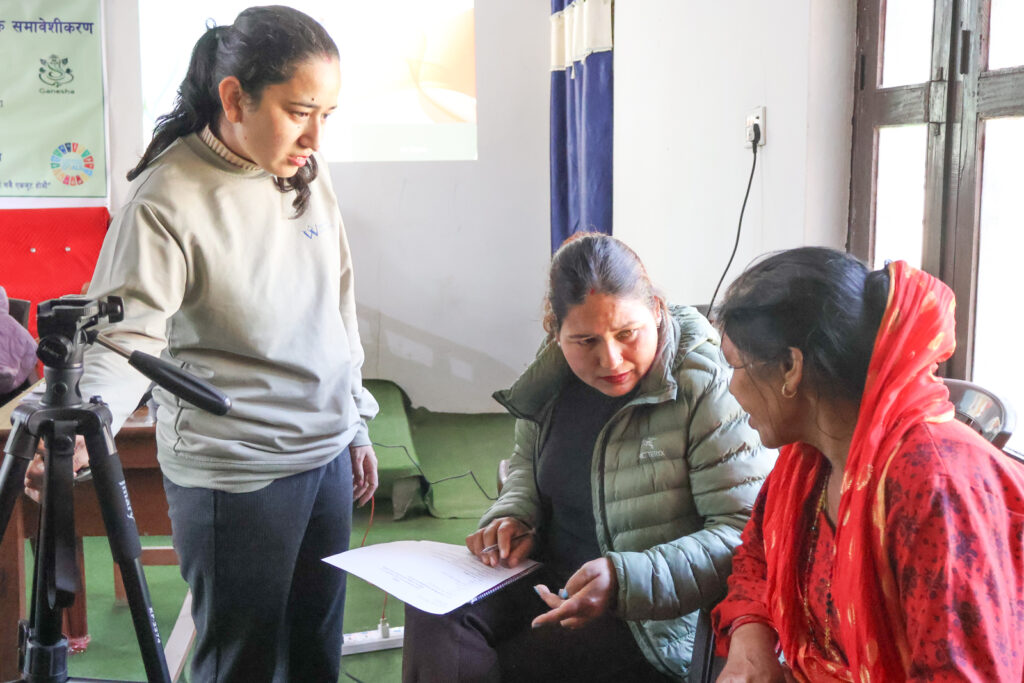
The second GEDSI workshop under Project GANESHA was delivered at the Bardiya pilot site, with clear objectives: to strengthen understanding of GEDSI concepts and to support inclusive practices at the household and community levels.
Workshop details (Pilot Site 2)
Location: Thakurbaba Municipality–9, Thakurdwara, Bardiya GEDSI workshop Pilot 2
Participants: 21 participants
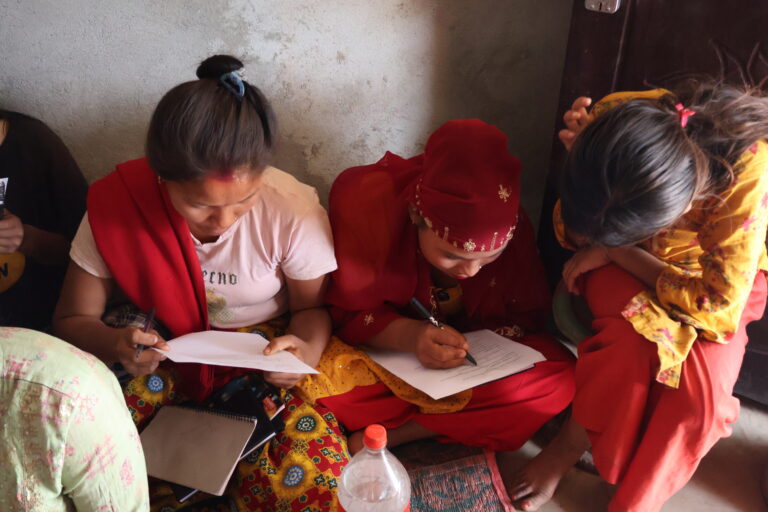
Delivery method: participatory and interactive sessions (group discussions, presentations, experience sharing, and Q&A), designed to relate GEDSI concepts to daily life and community context.
Participation profile (aggregated)
Gender: 20 women, 1 man
Age range: 18–25 (3), 26–35 (4), 36–45 (6), 46–55 (6), above 55 (2)
These interactive methods created space for participants to connect new concepts to their own experiences and priorities, setting the foundation for the shifts captured in the pre- and post-evaluation results.
5) What we measured: pre- and post-evaluation results
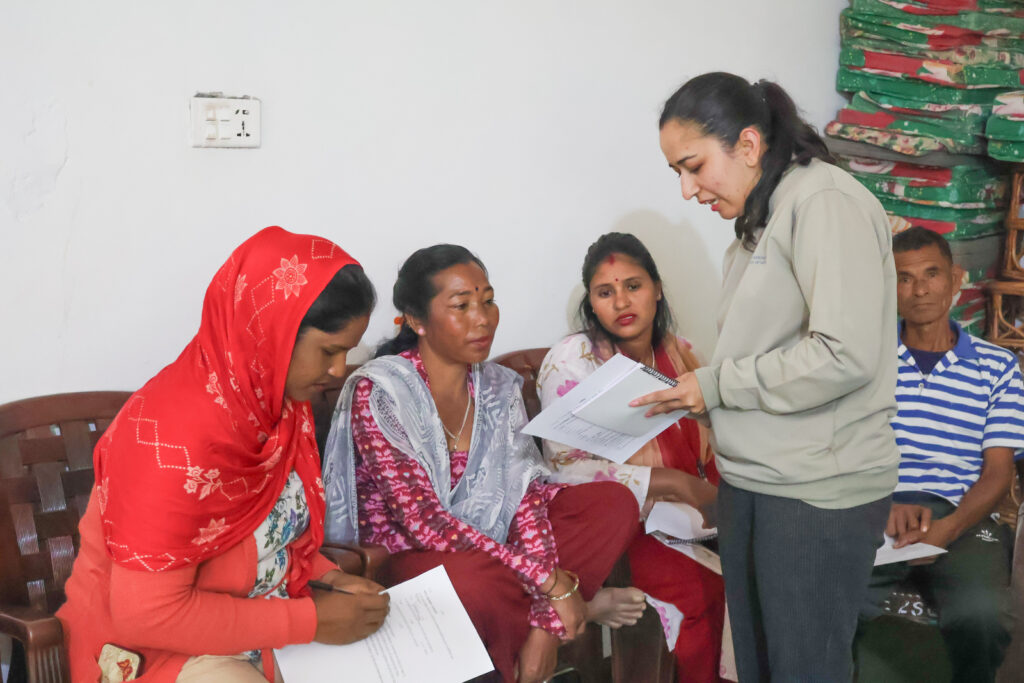
To support clear reporting and accountability, the workshop used structured pre- and post-evaluation forms covering demographics, knowledge and understanding, and attitudes/perceptions. Using the same evaluation approach across pilot sites provides comparable data that informs both project learning and formal reporting to funders and investors.
What participants hoped to gain from the workshop
The evaluation captured what participants wanted most from the session, including:
- Increased knowledge about gender equality and social inclusion concepts
- Awareness of local gender equality and social inclusion challenges
- Practical skills to promote gender equality and social inclusion
- Networking with like-minded individuals
Knowledge and understanding (before vs after)
| Indicator | Before | After |
|---|---|---|
| Familiarity with Gender Equality | 7 familiar / 14 unfamiliar | 21 familiar / 0 unfamiliar |
| Familiarity with Social Inclusion | 5 familiar / 16 unfamiliar | 20 familiar / 1 unfamiliar |
| Heard of GE/SI initiatives | 5 yes / 16 no | 21 yes / 0 no |
These shifts matter for delivery: greater familiarity and awareness create a stronger foundation for inclusive decision-making, more informed feedback on energy services, and more equitable participation as services are introduced.
6) How this strengthens project delivery, scale, and investability
This approach strengthens delivery in three ways:
Better-fit interventions
A needs assessment ensures that planning reflects the real community’s priorities at the pilot sites. By matching interventions to what people say they need, we reduce the risk of underused assets and increase the likelihood that new services will be adopted and maintained.
Shared understanding and capability
Training establishes a common foundation for participation and community-level application, supported by measurable pre- and post-test results. This shared understanding supports more representative community engagement, smoother problem-solving when issues arise, and clearer feedback loops as new energy services are introduced.
Clear reporting and repeatability
Using consistent evaluation tools supports structured learning and comparable reporting across locations. It also means we can demonstrate, with evidence, how GEDSI activity is contributing to stronger outcomes over time, which is increasingly important for access to climate and inclusion-linked finance.
This aligns with Global Solutions’ TICAP values (Transparency, Integrity, Collaboration, Adaptability, Purpose), including designing for local contexts and prioritising clarity. For delivery partners, donors, and investors, this shows that GEDSI is not a standalone activity, but integrated into how Global Solutions plans, implements, and reports on its work.
7) What happens next?
As Project GANESHA progresses, this GEDSI approach is being developed as a repeatable delivery element that can be tailored to each location, supported by continued community input and ongoing evaluation. Additionally, the needs assessment has been further developed based on a review of the effectiveness of prior assessments.
Regarding the third survey, data collection is still in progress. Our target is 150 respondents from each pilot site. As survey work expands, our GEDSI approach continues to cover inclusion considerations across communities, including disability and other groups who may experience barriers to participation and access. This larger sample will help us link GEDSI indicators more directly to energy-related behaviour and preferences, strengthening both our learning and our evidence base for future funding rounds.
For future projects and development, we intend to reserve a portion of revenue for an accredited GESI NGO to advise on training, hiring, and strategies to increase inclusion and equity.
Over time, this creates a built-in mechanism to keep specialist GEDSI expertise close to operations, rather than relying on one-off consultancy, and signals a long-term commitment to inclusion within the project’s financial model.
We are developing a strategy that can be tailored to each location and has evolved over the past 2 years of this project.
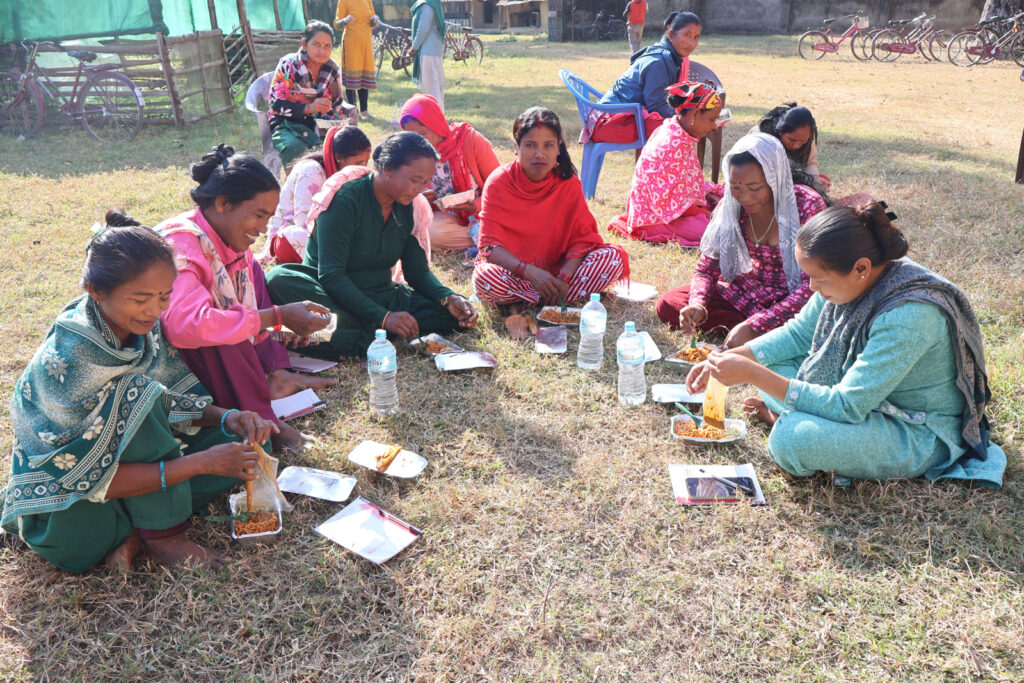
To support delivery now, GEDSI activity is being implemented through collaboration with local partners, a structured needs assessment, and measurable training delivery, using consistent evaluation tools. As the project scales, these same tools can be applied in new locations, enabling comparable data and a coherent story across a wider portfolio of sites.
TL;DR
- GEDSI is embedded into Project GANESHA delivery alongside the technical work, using a repeatable approach developed over the past two years and tailored to each location.
- At Pilot Site 2 (Bardiya), needs assessment and local delivery informed a participatory GEDSI workshop (21 participants), with measured pre- and post-improvement (Gender Equality familiarity: 7→21; Social Inclusion familiarity: 5→20).
- Survey 3 is underway (150 respondents per pilot site) to strengthen the evidence base and support consistent reporting as delivery expands.