What It Takes to Keep EV Rickshaws Moving
EV Rickshaw battery systems are central to keeping low-carbon mobility moving in Nepal and India. As EV Rickshaws continue to prove demand for cleaner transport, the real question is what keeps them running day after day, and what needs to be in place for systems like this to scale reliably.
In particular, our site visit focused on the practical foundations behind uptime: factory readiness, monitoring, fault response, and the stakeholder pathways that support rollout.
Table of Contents
- Nepal and India: Purpose of the Visit
- Kathmandu: Factory Systems and Skills
- Electronics, Data and Payment Systems
- From Factory Floor to Investment Floor: Sankalp Bharat 2025
- British High Commission, Mumbai
- Intellecap
- Connecting with the Wider Ecosystem
- Making the “Invisible” Part of Clean Mobility Work
- What This Trip Advanced
- Looking Ahead
Nepal and India: Purpose of the Visit
In early December, our team travelled to Nepal and India to see Project GANESHA’s battery technology in action. Specifically, we visited factories, workshops, streets, and rickshaw stands, as well as meeting rooms and conference halls.
Overall, we had two aims in mind:
- Working alongside partners in Kathmandu to prepare hardware and factory systems for deployment
- Taking that progress into policy, finance and investor conversations in India, strengthening the conditions for scalable rollout
Kathmandu: Factory Systems and Skills
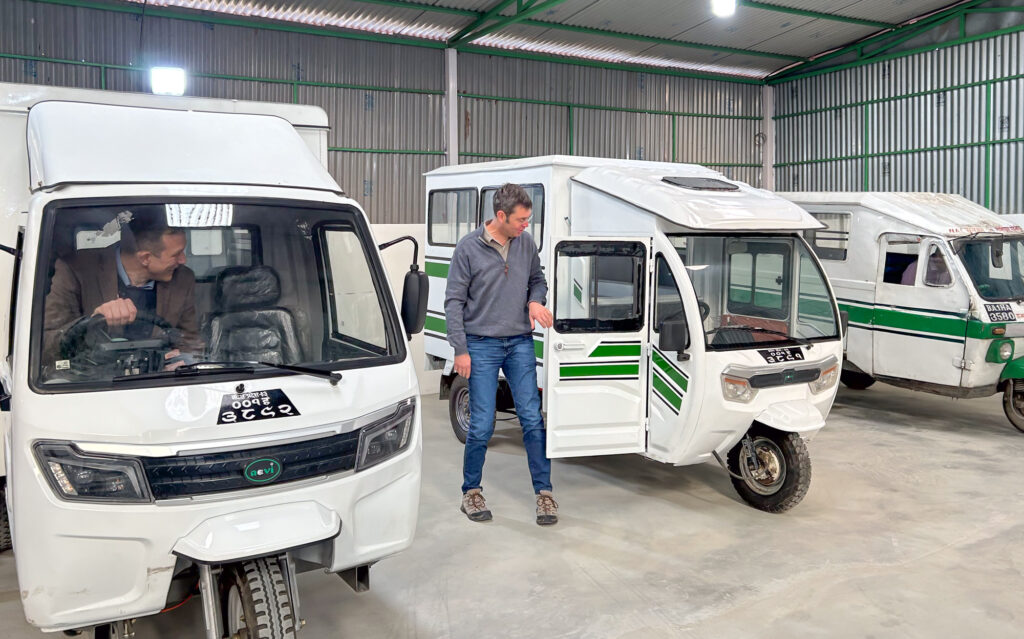
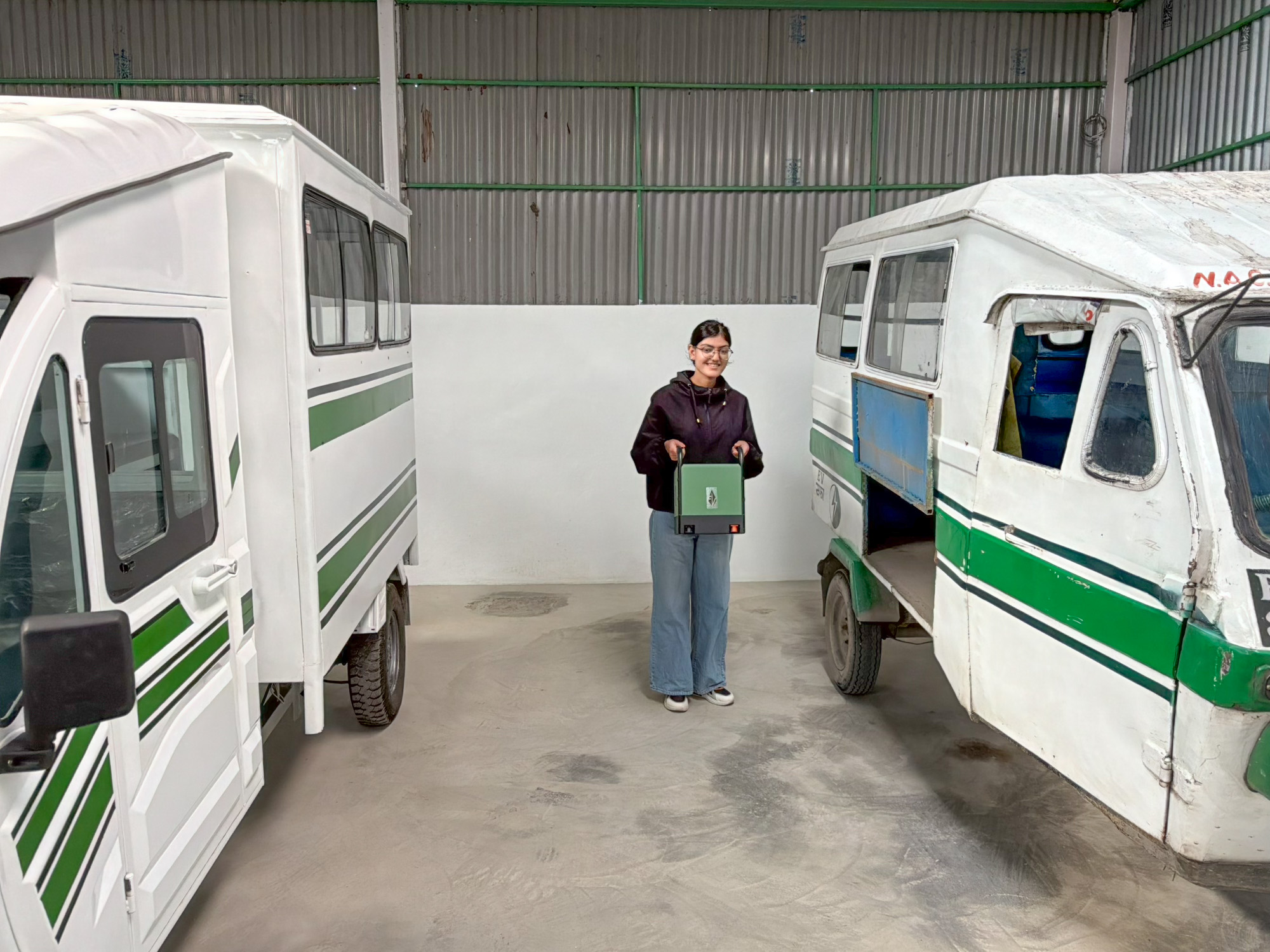
Our first stop was Kathmandu, where the NEVI factory is evidently gearing up to assemble and deploy the modular battery packs and cradles at the heart of Project GANESHA.
It was here where we had a structured walkthrough covering:
- Battery assembly lines
- Vehicle upgrade bays for EV Rickshaws
- Cradle assembly and mounting areas
- Testing and quality-control zones
- Spares and storage
Additionally, live demonstrations took the team through:
- Step-by-step battery assembly
- Repair workflows and tools
- Cradle integration and mounting
- The full vehicle upgrade process for an EV Rickshaw
This gave everyone a shared view of how the design translates into repeatable factory processes and how roles and responsibilities map across the line.
The visit also focused on people and capability, together, we:
- Met technicians across the line
- Reviewed the skills in place at the present time
- Agreed priority areas for additional training as volumes increases furthermore
- Confirmed resource plans around labour, tooling and parts, being equally important
To close the loop, our Operations Director, David Tetlow, not only managed to climb into it, but also tested one of the upgraded EV Rickshaws in the factory yard. Evidently, a simple way to connect factory process readiness with the real user experience on the road.
Electronics, Data and Payment Systems
Following on from the morning session, the afternoon focused on electronics and data systems with our EPT and PAK partners, together.
Key areas of work included:
- Battery and BMS data capture and monitoring
- Charging rack electronics and health checks
- Reviewing logged issues from earlier pilots, confirming that fixes are now embedded into implementation and commissioning plans
- Exploring QR-code payment approaches aligned with systems already used successfully in comparable markets
By the end of the day, we had:
- A clear implementation list for monitoring and control features
- Agreed delivery schedules for batteries and cradles to both pilot sites
- Alignment of the sequence for vehicle deliveries
- Confirmed commissioning milestones for the coming months ahead
From Factory Floor to Investment Floor: Sankalp Bharat 2025
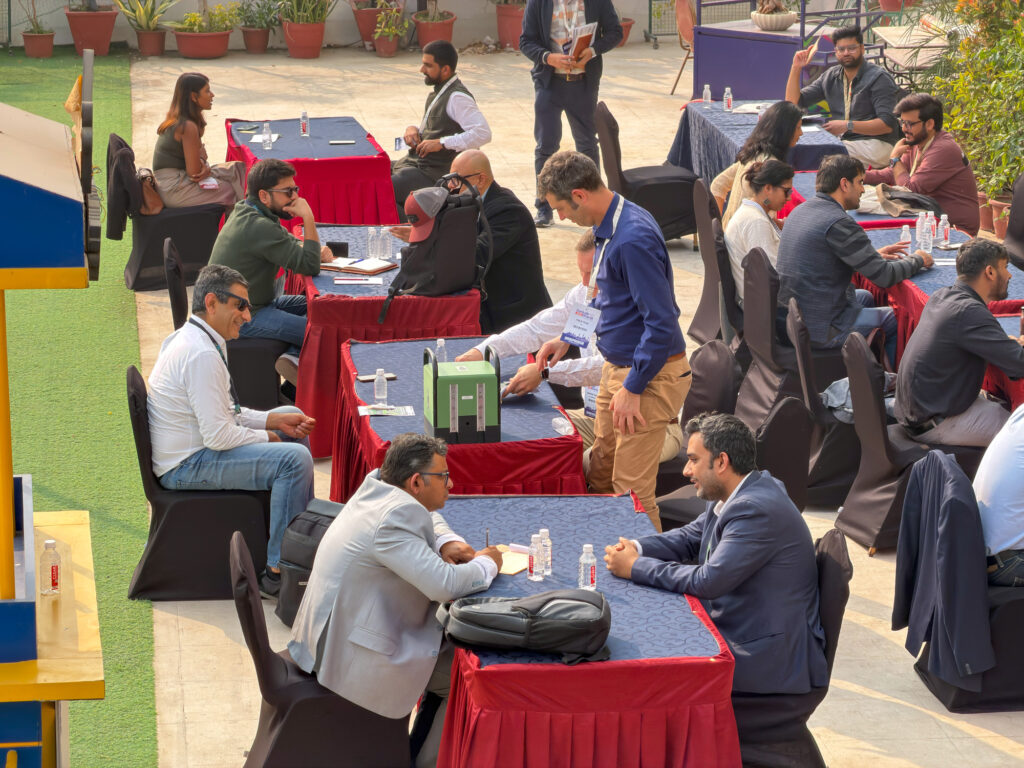
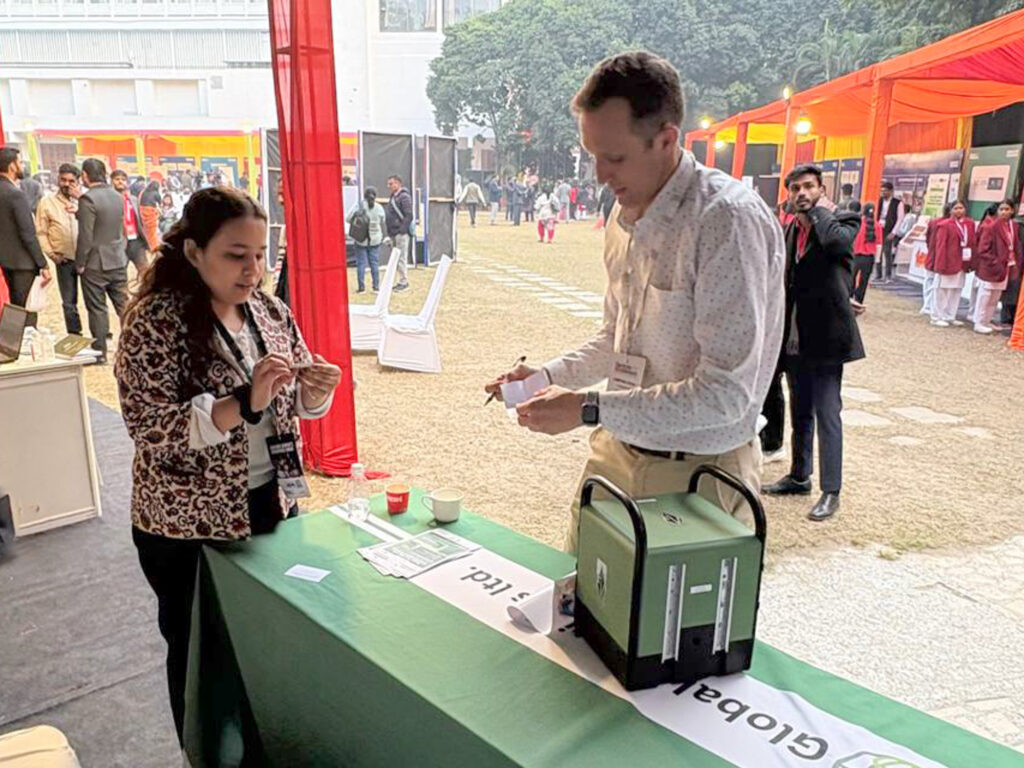
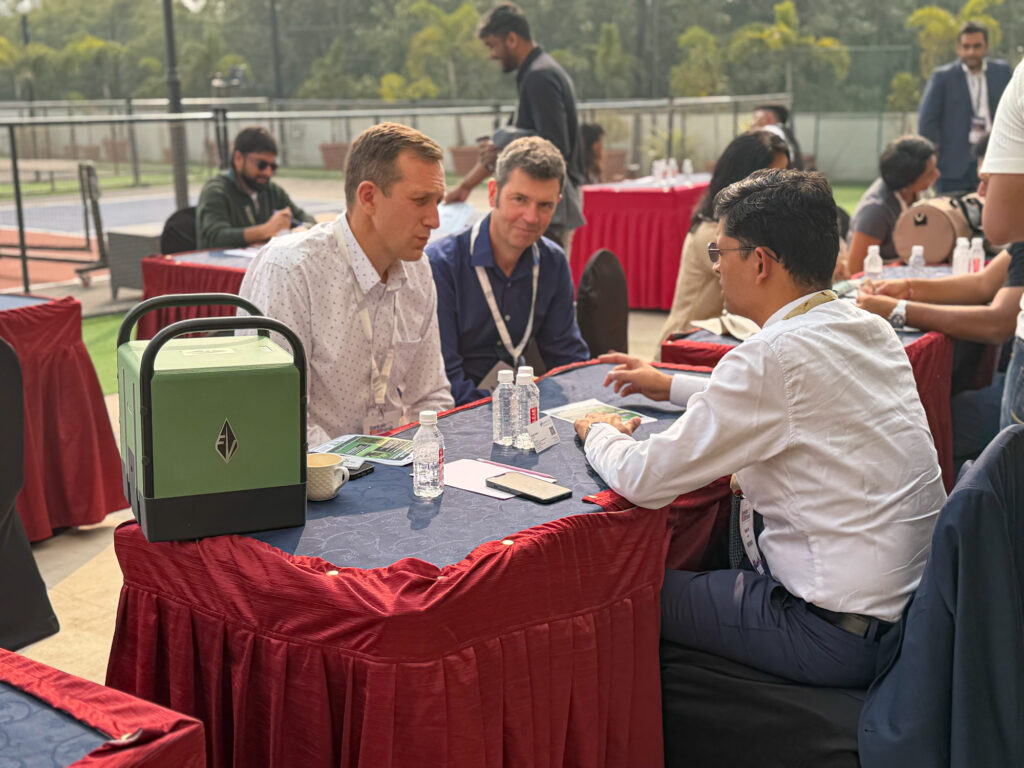
In contrast, the team headed off to Kathmandu, India, for the Sankalp Bharat Summit 2025, which is a major gathering for climate, clean-energy and rural-enterprise investors and innovators.
Between working sessions in Lucknow, refining how we present our modular battery systems and EV Rickshaws, they met organisations shaping the future of clean mobility in the region.
British High Commission, Mumbai
The team met Pratiksha Kshirsagar, Senior Trade Advisor for Energy, with attention to exploring how policy, trade and city decarbonisation strategies can support modular battery systems and EV Rickshaws at scale, and how UK–India collaboration can strengthen the pathways that enable delivery.
Intellecap
With Intellecap, the focus was on delivery models: roadmaps for local partners, manufacturing hubs, and EV Rickshaw hubs across India. This was informed by data and day-to-day operating conditions, so that deployments are investable, repeatable, and locally owned.
For Global Solutions, this is explicitly what progress looks like: engineering, finance and policy moving in step.
Connecting with the Wider Ecosystem
At Sankalp Bharat, we engaged with organisations operating at the system level on India’s clean-energy transition.
In particular, it was a highlight to meet representatives from, TERI, which has long contributed to India’s sustainable energy and climate agenda.
These conversations help ensure that:
- Project GANESHA remains aligned with national and regional priorities
- Our modular, repairable battery packs support the needs of rural communities and operators
- Future pilots and scale-up plans can integrate with existing programmes and knowledge, adding value rather than duplicating effort
Throughout the summit, discussions centred on practical solutions for mobility, community energy and climate resilience, themes that closely match our work across the region.
Making the “Invisible” Part of Clean Mobility Work
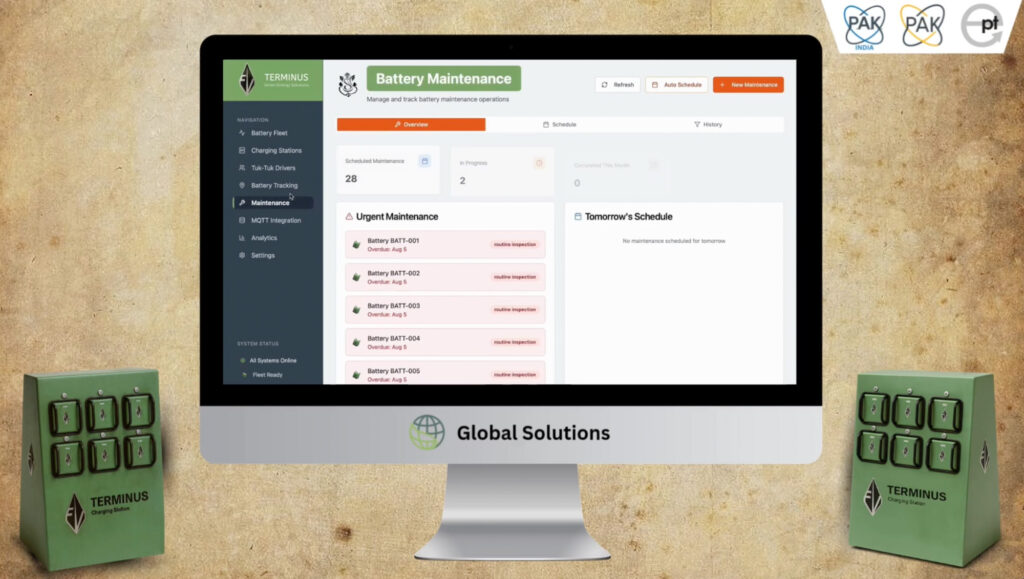
A consistent theme in conversations with operators and investors was the importance of what happens behind the scenes.
Indeed, EV Rickshaws are already delivering low-carbon transport on the streets of India. Their long-term success depends on the strength of the supporting systems: battery condition, charging practice, monitoring, and straightforward routes for maintenance and repair.
In swappable models, batteries are the lifeblood that keeps vehicles on the road, being the most capital-intensive part of the system.
That makes the commercial question unavoidable:
Who owns the battery, and how does it generate returns?
A battery is only an income-producing asset when it is being used, which is why monitoring and diagnostics matter. They allow us to identify issues early, fix them quickly, and prevent avoidable downtime, thus protecting utilisation and preserving asset value.
Global Solutions are building its batteries around that reality, where our approach is designed for real-world conditions, with visibility and repairability treated as core features, because protect asset value and support livelihoods. In practice, the system will:
- Track battery state of health
- Detect and flag developing faults early so issues can be fixed before they become failures
- Enable local repair pathways so assets remain productive for longer
These choices are informed by delivery experience and evidence from pilot sites in contrasting environments, and are strengthened through partner collaboration and public innovation scrutiny.
Our batteries are built for the real world.
What This Trip Advanced for EV Rickshaw Battery Systems
Across Nepal and India, the week delivered four important outcomes:
Strengthened technical readiness
The Kathmandu factory sessions confirmed that the battery packs, cradles and upgrade processes can be implemented with local capacity, with a clear set of enhancements to support reliable, scalable production.
Shared operational understanding
Time in the factory, in upgraded vehicles and with technicians has given all partners a common view of day-to-day operating conditions, from tools and spares through to data connectivity and payment flows.
A joined-up investment narrative
Meetings at Sankalp Bharat, with investors, policy advisors and ecosystem organisations, have helped position Project GANESHA as a scalable, replicable system that can sit inside robust commercial structures and support rural economies across the Global South.
Strengthened stakeholder alignment in-market
Engagement with the Department for Business and Trade and the British High Commission strengthened relationships and delivery pathways that support deployment on the ground, building confidence in the model, reducing delivery friction, and reinforcing the conditions required for scale.
Looking Ahead
Since returning, our teams have been working through the agreed actions from Kathmandu and Sankalp Bharat.
We are finalising monitoring and control features, progressing training plans with local partners, and continuing discussions with organisations who are interested in supporting the next stages of deployment.
With two pilot sites in Nepal moving towards go-live, our focus is on completing commissioning steps, confirming operational workflows, and ensuring that monitoring, maintenance, and repair pathways are in place to keep assets productive in the field.
The trip demonstrated that the key elements are aligning: technically robust hardware, capable partners on the ground, and strong interest from institutions who are, undoubtedly focused on clean mobility and rural development.
We’ll continue sharing updates as Project GANESHA moves from pilots to a wider rollout in Nepal, India, and beyond.
TL;DR
- Kathmandu: We validated repeatable factory workflows for modular battery packs, cradles and EV Rickshaw upgrades at the NEVI / PAK facility.
- Capability: We aligned roles, training priorities and resourcing to support reliable production as volumes increase.
- Systems: We progressed with electronics, data capture, and monitoring using EPT and PAK, confirming implementation actions and control features.
- De-risking: We reviewed issues logged from earlier pilots and confirmined fixes are embedded into the current implementation and commissioning plans.
- Delivery readiness: We agreed on delivery sequencing, schedules and commissioning milestones for both pilot sites.
- India: Sankalp Bharat strengthened the investment and delivery narrative through ecosystem engagement and scale-focused conversations.
- Stakeholder pathways: Engagement with the British High Commission and the Department for Business and Trade reinforced the relationships and pathways that support deployable rollout.
- Core takeaway: EV Rickshaw scale depends on the “invisible” systems: monitoring, maintenance and repair routes, because batteries are the most capital-intensive, uptime-critical asset in swappable models.