From a Solar Lunch in Mallorca to Kitchens in Nepal: Closing the Clean Cooking Affordability Gap
At the 6th International S-Access Conference in Mallorca, a live clean-cooking demonstration brought the energy access challenge into focus.
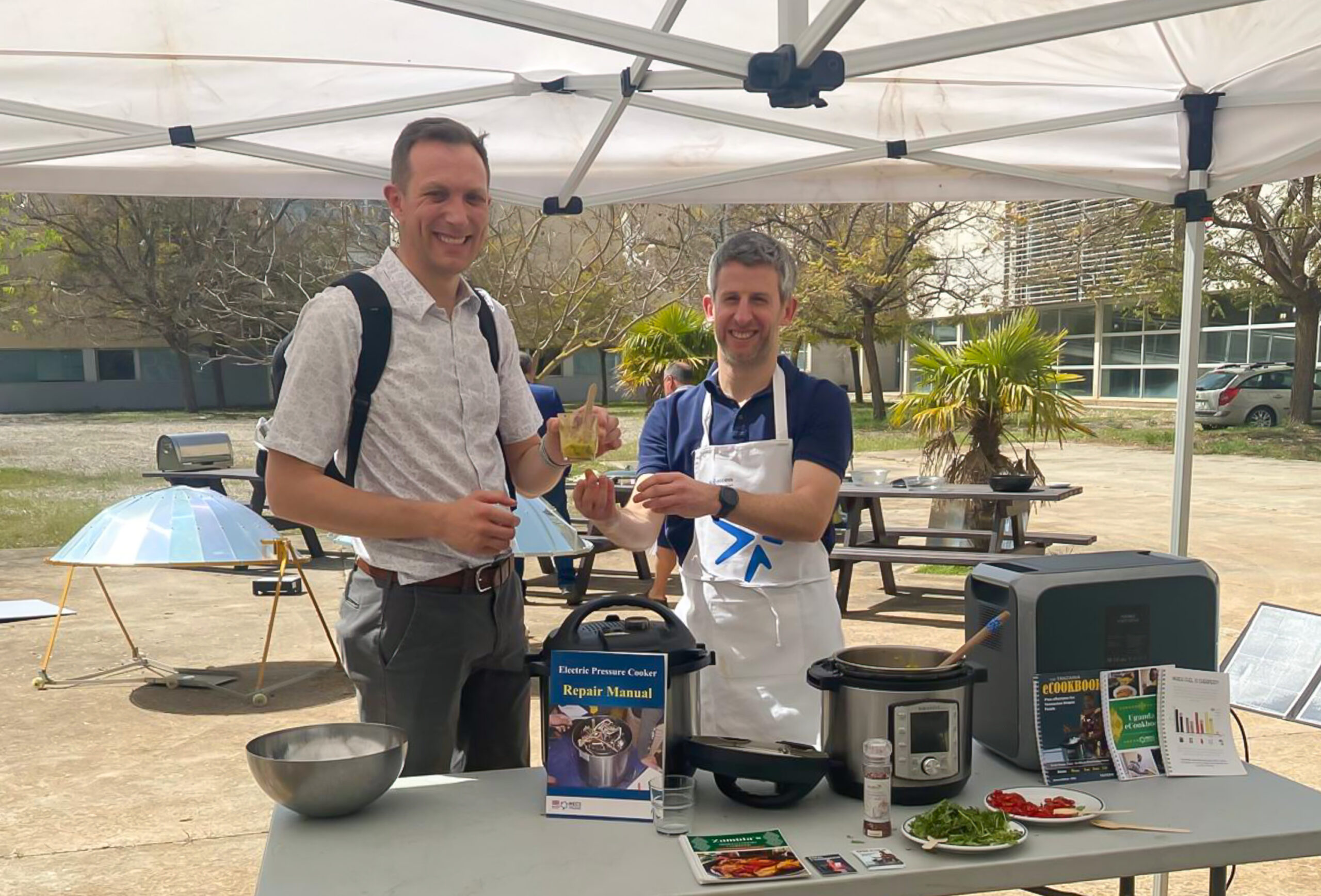
On the conference patio, Richard Sieff from MECS, the Modern Energy Cooking Services programme funded by UK aid, was cooking with an electric pressure cooker powered by an off-grid solar system.
Alongside other clean-cooking technologies the session showed that solar-powered cooking is not a future concept. It is already working.
Delegates later ate the food prepared during the demonstration at the Solar Lunch. This gave them a direct experience of what modern energy cooking delivers when technology, research, and practical deployment come together.
For Global Solutions, the significance is clear. Clean cooking technology is already working. The next challenge is making it affordable, accessible, and commercially viable for the families and communities who need it most. This is where the business model matters.
Table of Contents
- A Different Kind of Session
- The Evidence Base Is Already Strong
- The Solar Is There — So What Is Holding Families Back?
- The Final Gap
- Where GANESHA Fits
- What Comes Next
- TL;DR
1. A Different Kind of Session
There is a particular kind of conversation that only happens between sessions.
At the 6th International S-Access Conference in Mallorca this April, while Session 9A was running inside, something else was happening on the patio.
Richard Sieff from MECS, the Modern Energy Cooking Services programme funded by UK aid, was cooking over an electric pressure cooker running entirely on a standalone off-grid solar system.
The session, called Cooking with the Experts: Interactive Clean-Cooking Technologies, and the food prepared was served at the Solar Lunch afterwards.
The conference closed its doors, the delegates filed out, and they ate a meal cooked entirely using solar-powered technology.
This was not a demonstration of something that might exist in ten years. It was a demonstration of something that exists now, works now, and that most of the world still does not have access to.
That gap, between what is technically possible and what is economically reachable for the families who need it most, is the problem the S-Access community is trying to close. It is also the problem GANESHA is solving, because GANESHA is not only about storing energy, It is about creating the financial, digital, and operational route that allows families to use that energy affordably.
2. The Evidence Base Is Already Strong
MECS has been building the evidence base for electric cooking across multiple countries and cuisines for several years.
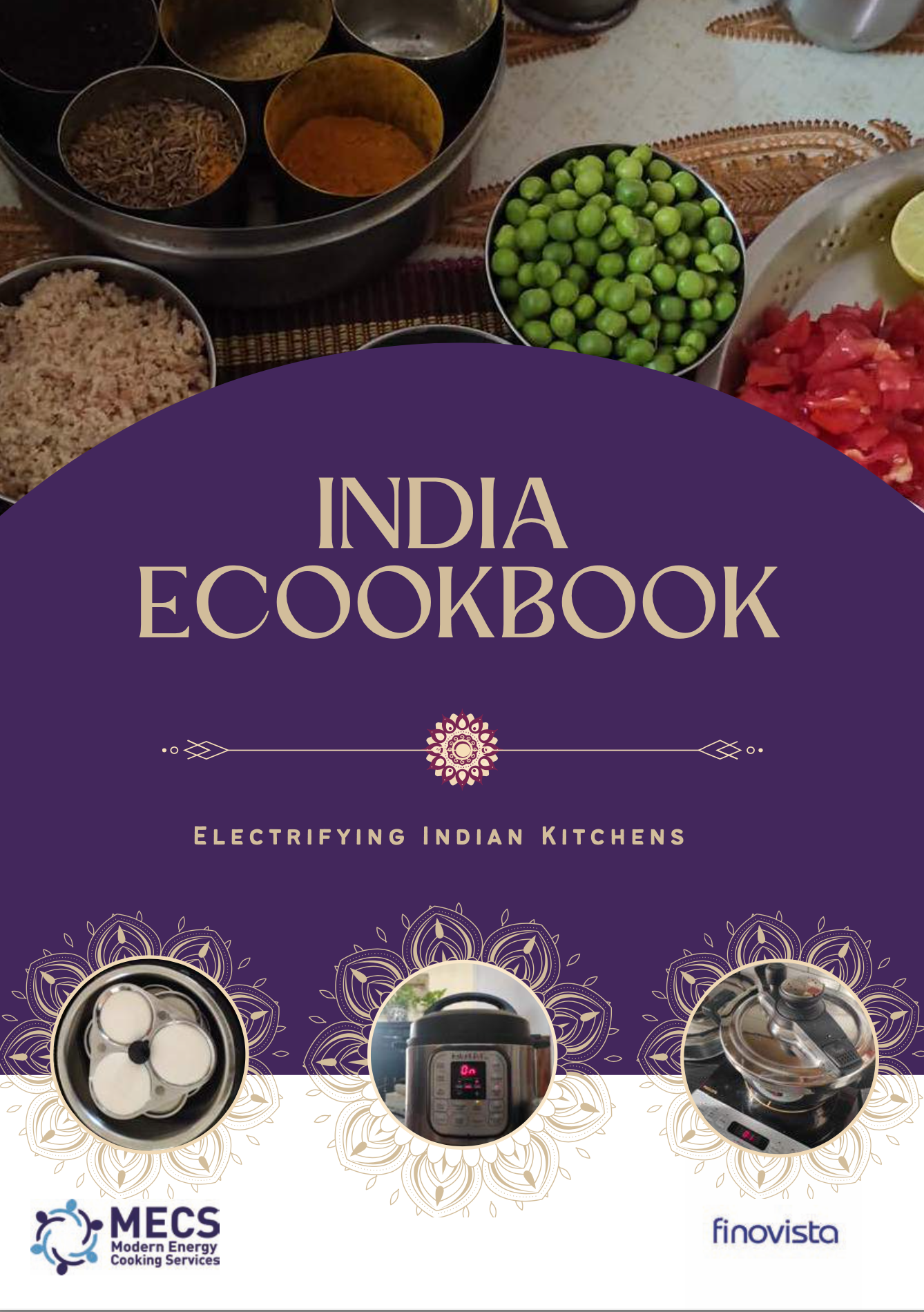
The India eCookBook, published in February 2022 and developed by Finovista, the MECS programme partner in India, documents kitchen laboratory tests of electric pressure cookers across 24 popular Indian dishes, from dal and steamed rice to khichri and vegetable curries, comparing results directly to both induction cooking and LPG.
The findings are significant. An electric pressure cooker handles around 85% of a typical Indian household’s weekly menu. The same cooker prepares Rajma Masala at 60% lower cost than an induction stove with a conventional pressure cooker, and at 40% lower cost than subsidised LPG.
Dal cooked in an electric pressure cooker achieves better texture and flavour than the equivalent dish on induction. The device is fully automated, which means the cook can leave food unattended and get on with something else, and a single electric pressure cooker replaces the pressure cooker, the idli maker, the steamer, and the rice cooker.
India has made major progress on household electrification, with quality of supply improving year on year.
The technology works and the data is in, and yet in rural areas across India, and across the global south more broadly, many households still cook primarily on firewood and biomass. India is not an outlier here. There is a wider pattern visible across many of the countries represented at S-Access.
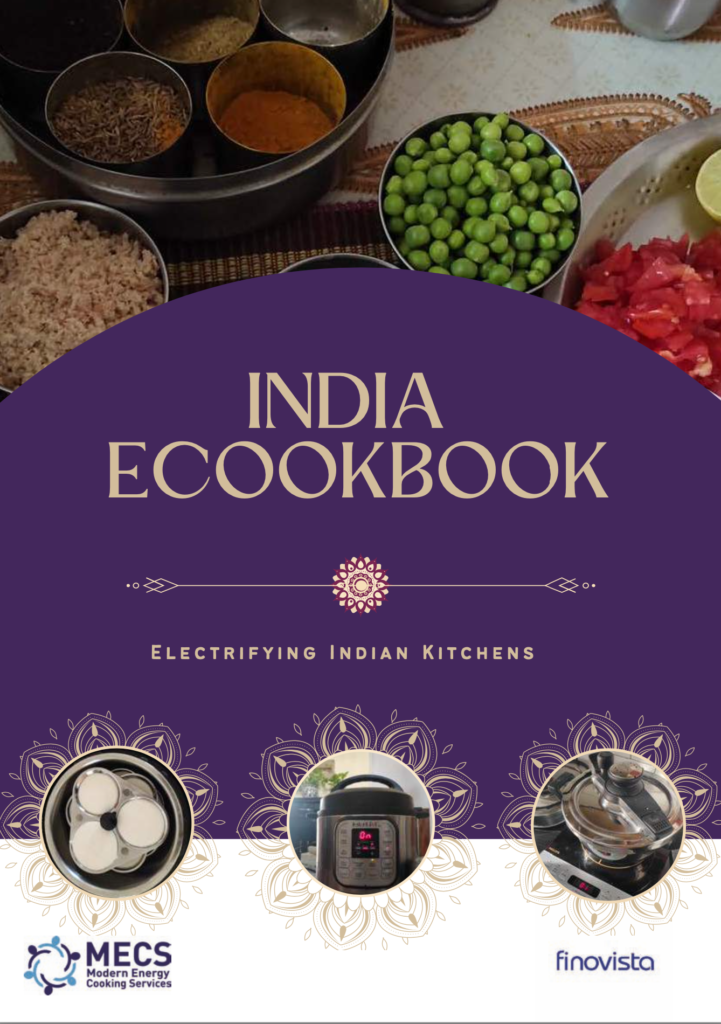
You can view the entire cookbook by clicking this link
3. The Solar Is There — So What Is Holding Families Back?
The S-Access conference convenes people from across the global south who are all working on versions of the same challenge: how do you deliver reliable, affordable clean energy to communities that existing infrastructure has never reached?
There were representatives from sub-Saharan Africa, Southeast Asia, South America, the Pacific, and parts of Asia, from NGOs, governments, universities, and companies. The specific challenges vary by geography and by project, but the underlying pattern is consistent.
Investment is flowing in. The World Bank, the African Union, bilateral development finance programmes: money is reaching governments and companies for solar infrastructure. Panels are going up. Batteries are being installed. Grid connections are being extended into places they have never reached before, and the infrastructure is real, with the scale of it significant. Yet infrastructure alone does not guarantee use.
The barrier is an affordability gap at the point of use. Families who have cooked on wood or charcoal for generations cannot absorb the upfront cost of switching to clean electric cooking, even when solar power exists within reach. As a result, they keep burning wood. Meanwhile, the investment that drives economic development in these communities sits underused, returning less than it should for the investors, the governments, and the families it was meant to serve.
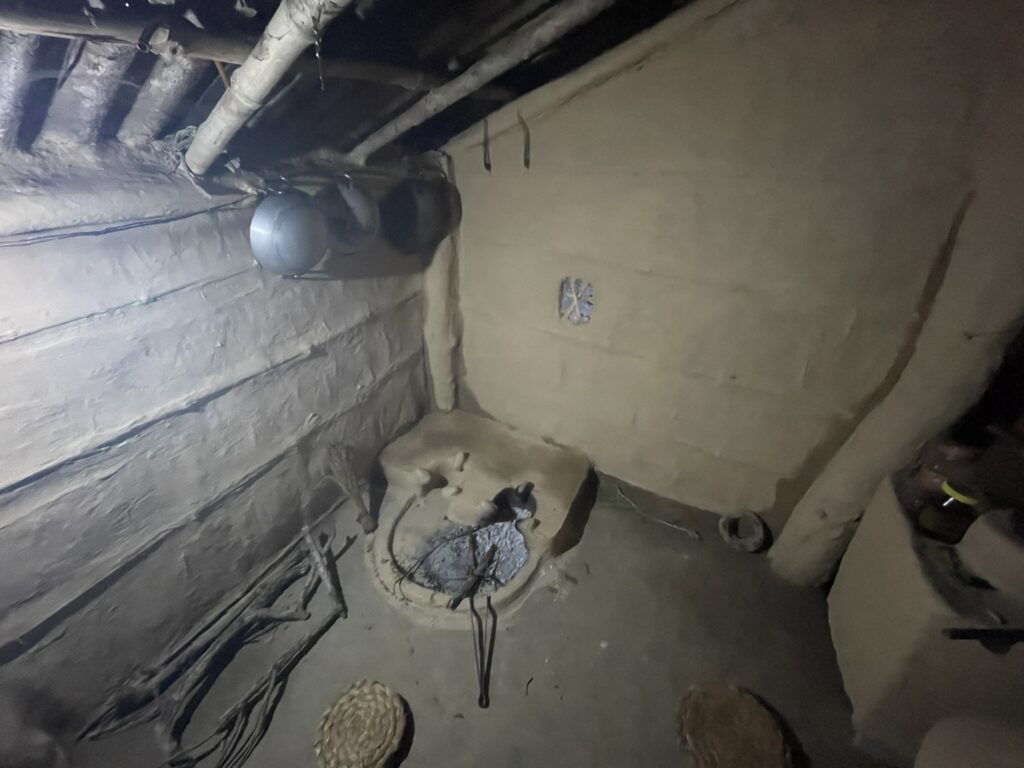
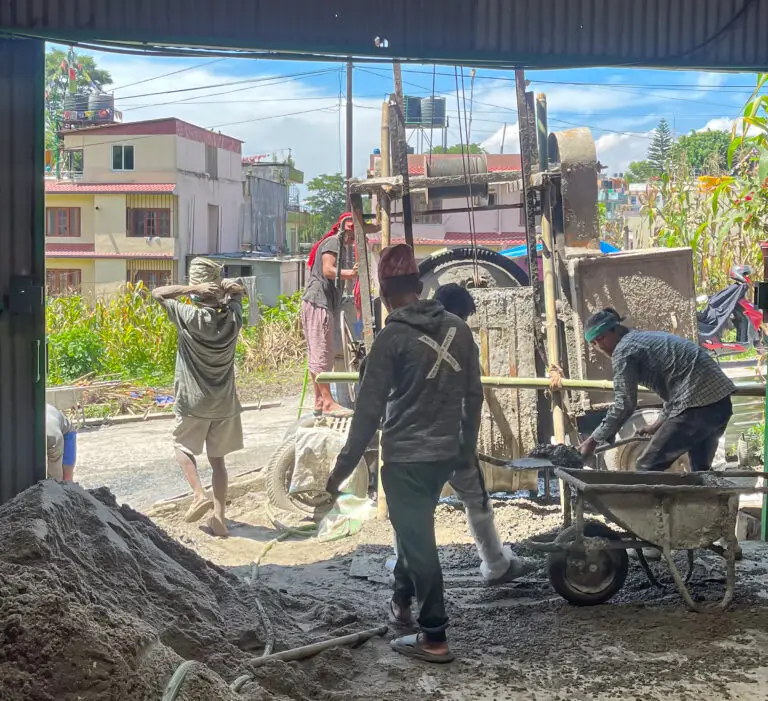
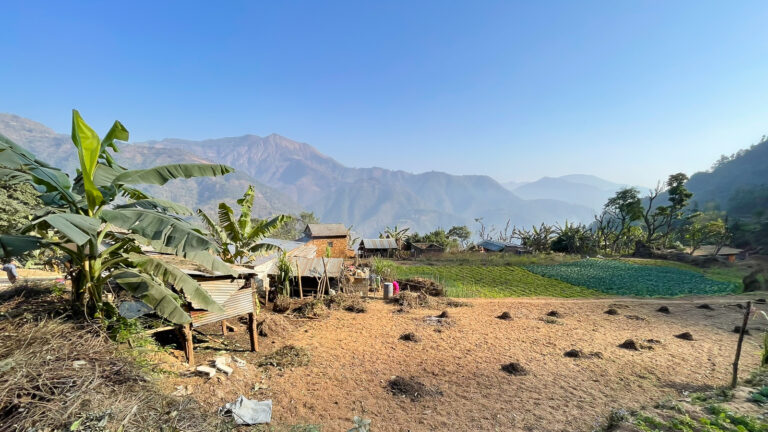
A traditional Kitchen in Nepal
4. The Final Gap
The missing piece is not the panel, the battery, or the appliance. It is the affordable access mechanism that connects households to the energy already being generated. Without that mechanism, solar infrastructure can exist within reach while remaining economically out of reach for the families it is intended to serve, and this is not a technology problem.
The research is done. The technology has been tested across dozens of dishes in kitchen laboratories across India, and it is holding up. The electric pressure cooker on that patio in Mallorca was not a prototype, it was a commercial appliance, running on a standalone solar system, producing a meal.
What the eCookBook research also shows is that the route to making this affordable at household level runs through demand aggregation, digital financing, and data, which are exactly the mechanisms that make the GANESHA model viable.
The gap is a business model gap. On one side, there is capital that has already been invested in solar infrastructure, seeking a return. On the other, there are families who need to use that energy to cook their food and grow their incomes, but have no affordable route to access it. Between those two groups, at present, there is a void, and that void is where the opportunity sits.
5. Where GANESHA Fits
This is not an abstract problem for Global Solutions. It is the specific problem we are working on.
The GANESHA project in Nepal is building a platform designed precisely for this gap.
Investors fund the technology, families access power through the battery, and households pay only for what they use. Over time, usage data tracks responsible battery stewardship, builds trust, and helps reduce power costs.
The system turns a household’s reliability history into a financial asset. A stepping stone into the financial services that follow once economic development takes hold.
This is a different model from what currently exists. Current approaches ask households to buy a battery outright or commit to pay-as-you-go hardware costs. GANESHA’s model asks investors to fund the infrastructure and gives households access to power through a data platform.
The differentiator is not the battery. It is the information management. The data services that bridge the gap between the capital already deployed and the family that needs to cook dinner tonight.
The clean cooking demonstration at S-Access made the connection explicit in a way that is hard to replicate in a conference presentation. A working electric pressure cooker, running on solar and producing food drew a queue of delegates wanting to know how it worked. Sitting aftrewards with Richard Sieff and the MECS team confirmed what we have been building towards in Nepal for two years. The depth of the research behind that demonstration made the connection impossible to ignore.
The technology is ready, and the commercial model to connect it to households is what we are now proving.
6. What Comes Next?
We are keeping in touch with Richard Sieff and the MECS team. Their research across India and other countries in the global south builds an evidence base that strengthens the case for the GANESHA platform.
Clean cooking becomes technically possible and economically preferable for households when digital financing, data, and demand aggregation remove the affordability barrier.
The conversation that started on a patio in Mallorca is one worth continuing.
The S-Access conference exists to create exactly this kind of connection. Practitioners from across the global south, working on the same underlying problem from different angles. Finding each other in the gaps between sessions, is what makes it worth attending. It is also why more UK companies and organisations should be in the room.
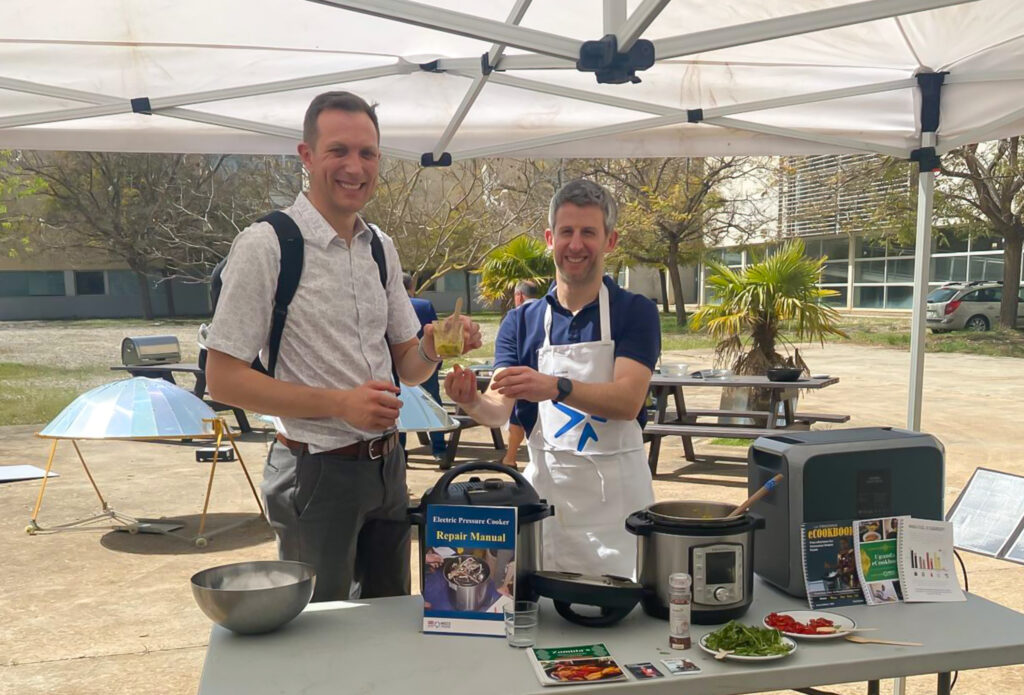
David Tetlow, Global Solutions and Richard Sieff, MECS meeting at the 6th International S-Access Conference in Mallorca, 2026
TL;DR
At the 6th International S-Access Conference in Mallorca, Richard Sieff from MECS and colleagues ran a live clean-cooking demonstration. They used parabolic solar cookers, solar box ovens, and an electric pressure cooker powered by a standalone off-grid solar system to serve lunch.
MECS research, shows that electric pressure cookers can cook around 85% of a typical household’s weekly menu. The India eCookBook, published in 2022, sets out the evidence in full. Costs run at 40 to 60% lower than LPG, proving the technology works.
The barrier to adoption is not technical. It is the affordability gap at the point of use. Governments and investors are building solar infrastructure across the global south. Families who cannot yet afford to switch away from biomass cooking are still not using it. This is the gap that GANESHA’s battery-and-data platform closes.
The remaining challenge is not whether clean cooking can work. It is whether the right business model can connect households, investors, data, and energy access in a way that works for everyone.